Original Works

Shannon
Wardroper

Storied textiles exploring our changing relationship with nature and technology

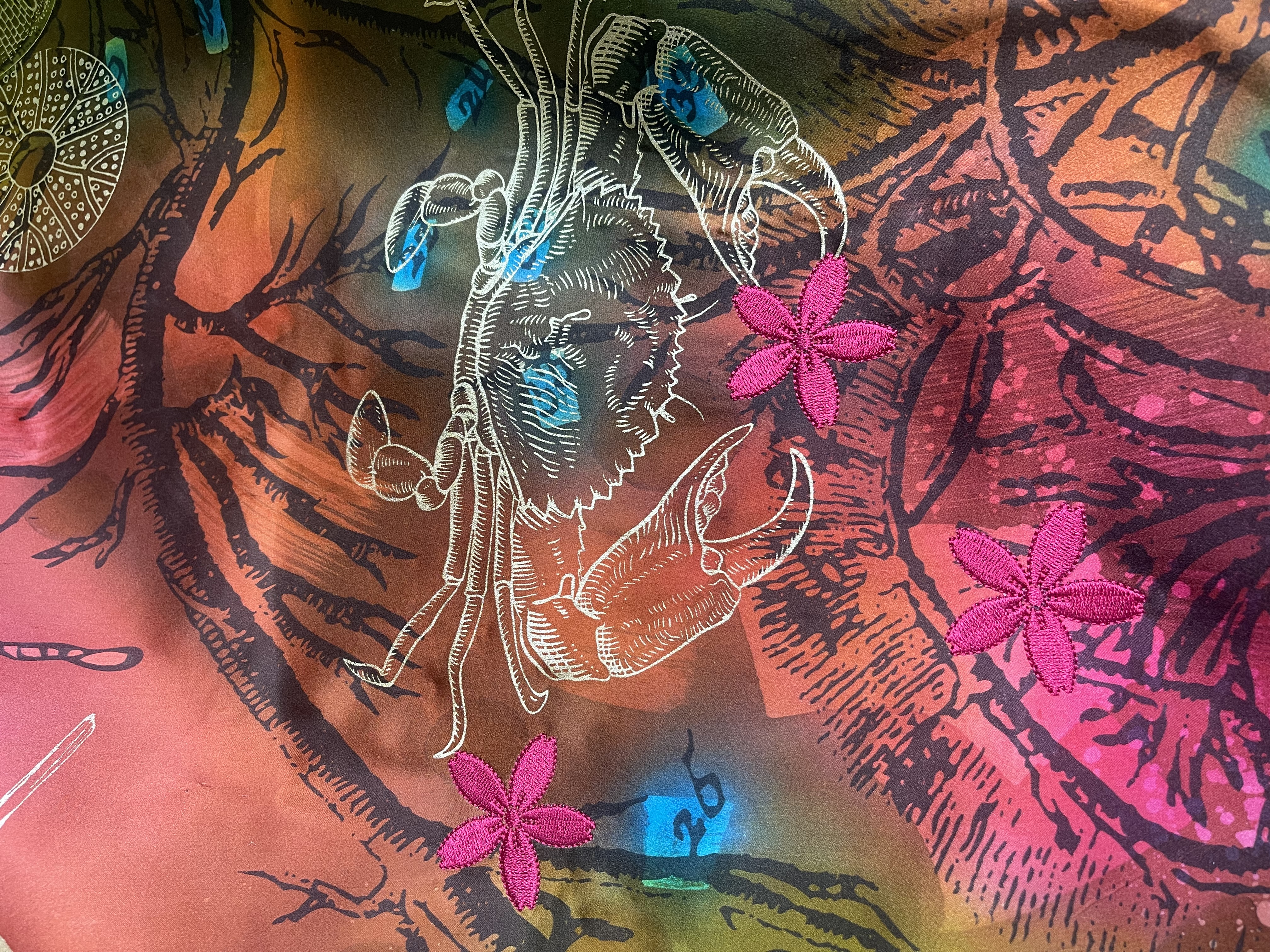
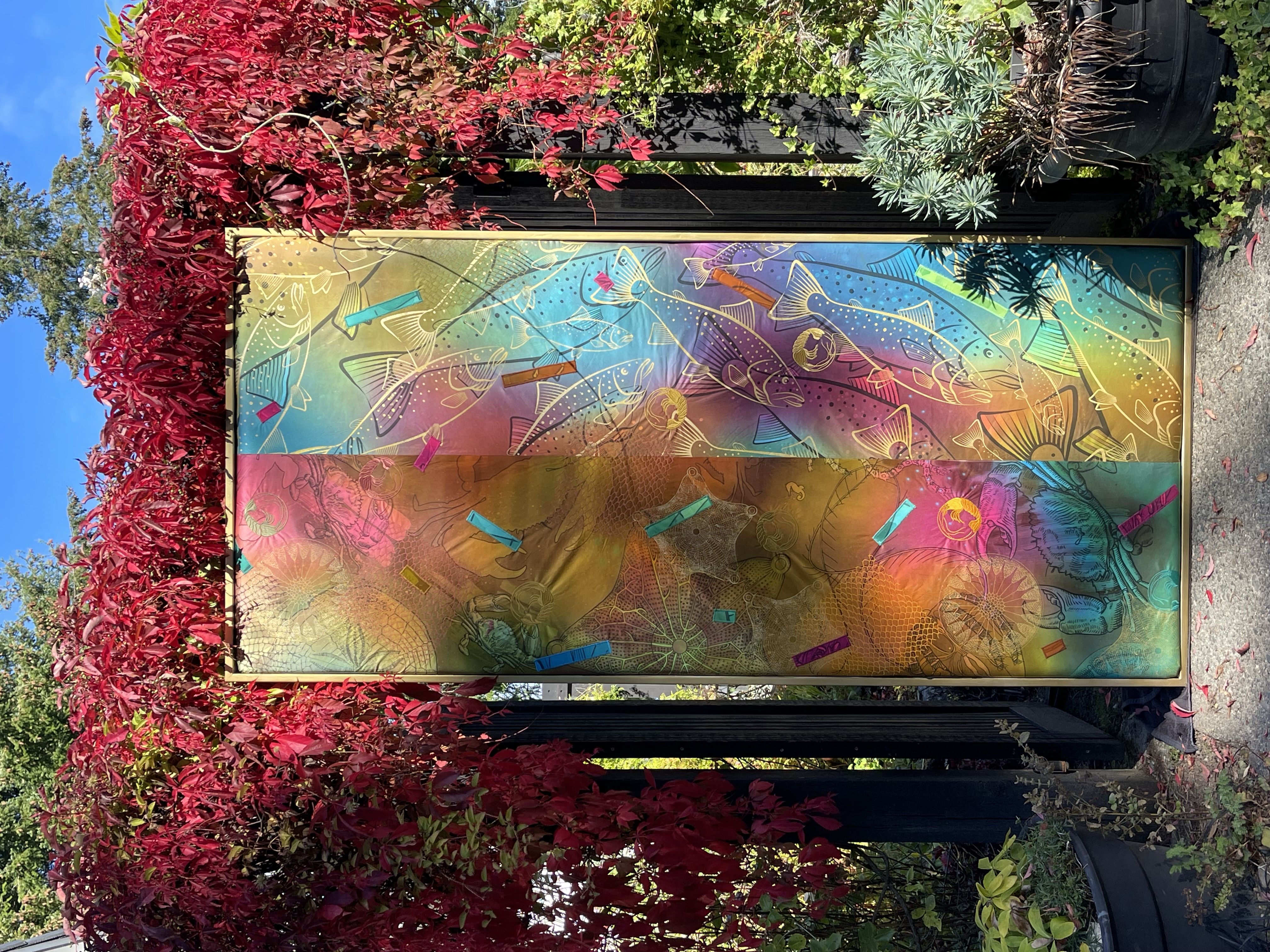
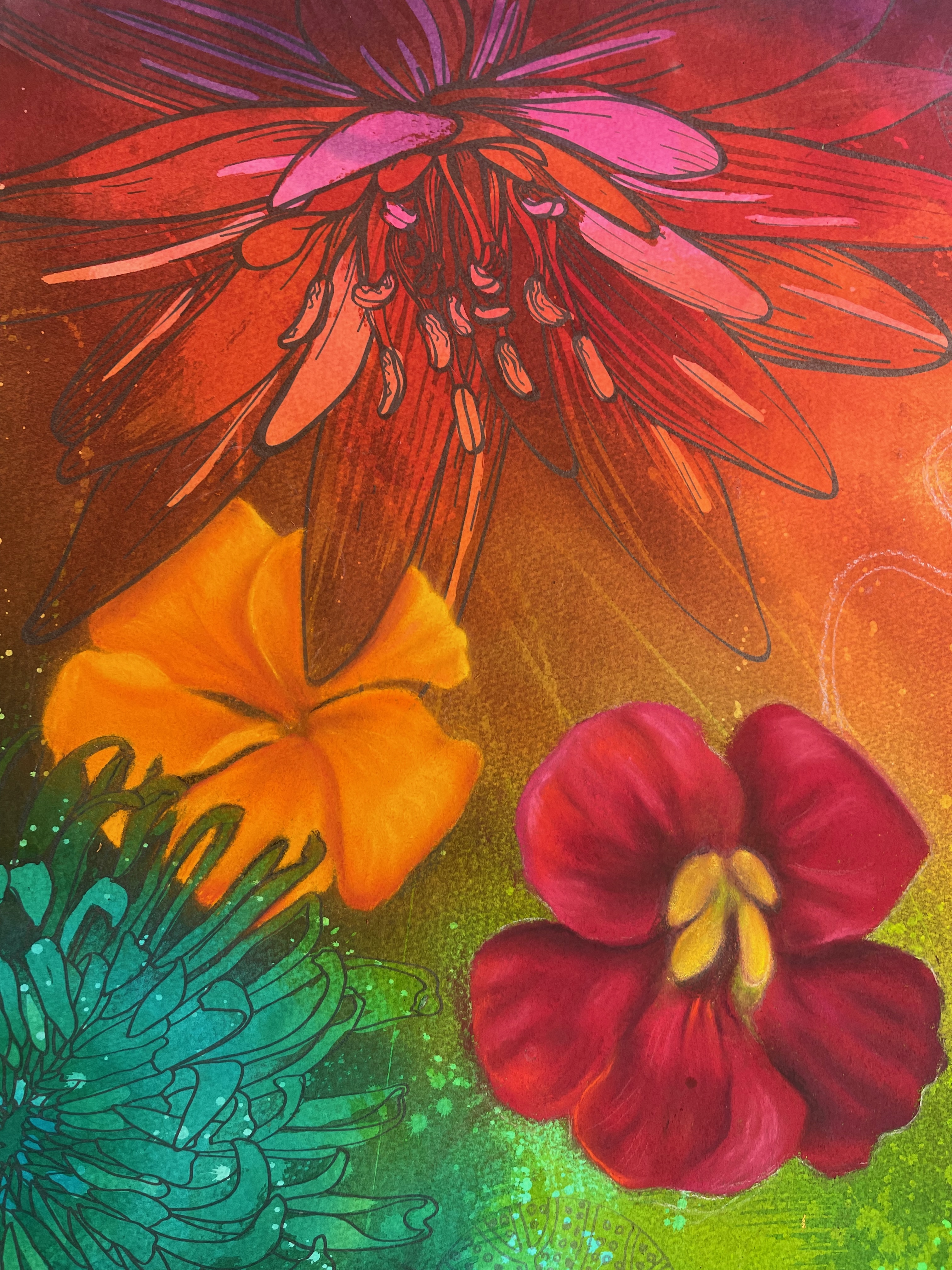
Plunge  ·  4 ft × 8 ft  ·  Screen printed, wax resist dyed, hand and digital embroidery, appliqué

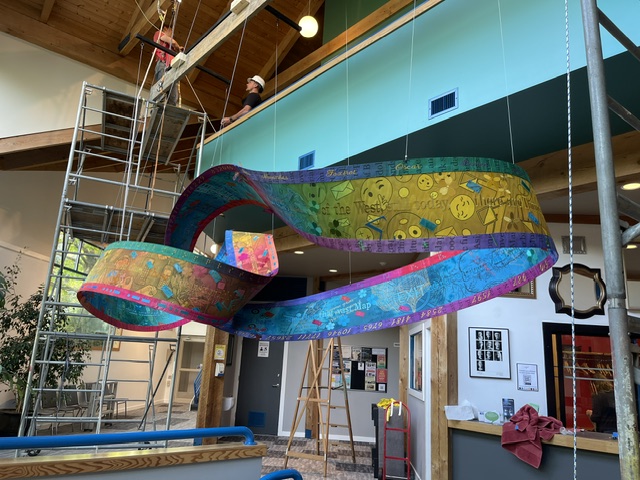
September 2026 — Public textile sculpture "Single Narrative Transformation Machine" is now installed at the ArtSpring theatre lobby


Selected

Exhibitions

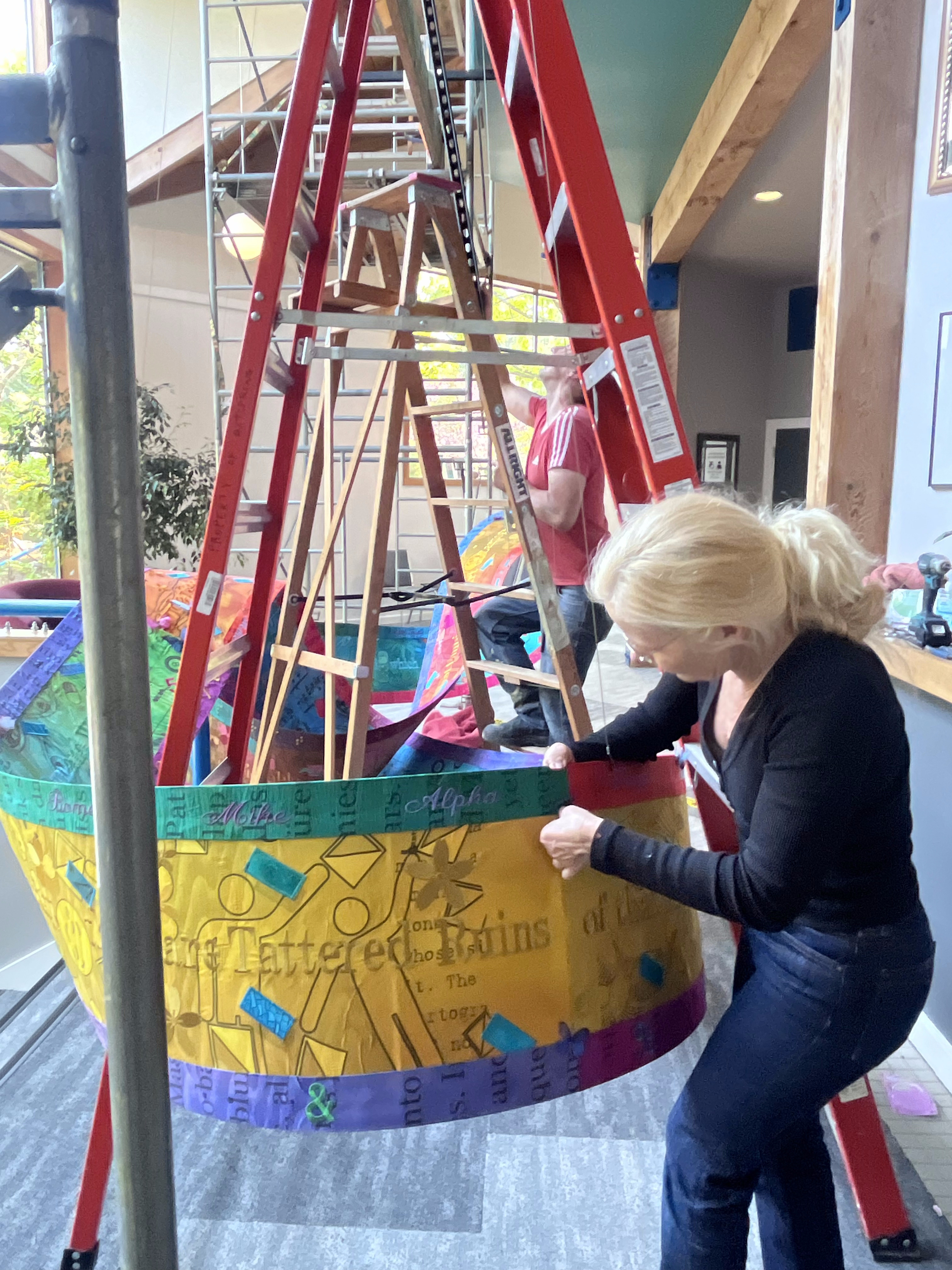
Single Narrative Transformation Machine  ·  Just installed August 2026!

ArtSpring Lobby  ·  Salt Spring Island  ·  2026
Single Narrative Transformation Machine

Single Narrative Transformation Machine

The Möbius strip, human communication and transformation

Why the Möbius?

"When making 3-dimensional work, I look for a shape that will support me, together with surface imagery, in telling a layered story. For this reason, I chose two entwined Möbius as they illustrate transformation and the importance of perspective."

Shannon Wardroper

To fashion a Möbius strip one affixes the ends of a long rectangular paper strip after first having given one of the ends a one-half twist. It then transforms, from a two-sided paper, to having only one side and it remains in one piece when split down the middle.

Mathematically, as explained by Neil deGrasse Tyson, if one had two left-handed gloves when beginning a journey through a Möbius strip, by the end, one would end up with both a left and a right, thus the Möbius is a ripe figurative and narrative symbol for transformation, repetition and feeling unoriented.

The Möbius is often referenced in the romantic sense of eternal love, a never-ending loop. Escher illustrated another perspective, one of futility and in fact, entrapment. When you try to go forward, you swing sideways, when you try to move inside, you find yourself outside. A hole punched into a Möbius strip seems to afford an escape of the endless looping path and a drop through, like a wormhole, but only to find oneself landing back on the same track below. The Möbius from this perspective, is a symbol for losing both control and your bearings. Observers on the outside can see this conundrum, as in Escher's illustration, but participants cannot.

"The Möbius struck me as an ideal sculptural form to embody and carry ideas about the transformative rewards and consequences of communication. The Möbius is timely as a cautionary symbol around modern communication on social media platforms where a deep isolated siloed dive, lacking multiple perspectives, can so often be destructive. Cautionary also, as we historically idealise many kinds of modern technology and focus on what's possible, often ignoring what's probable and in who's interests the technology truly serves."

Despite this, we can concurrently remember and celebrate, in the imagery, the importance of a multitude of ways of communicating, with attention as a moral act in deep listening to other perspectives and experiences. This textile sculpture highlighting communication was designed specifically for ArtSpring as it is a treasured public space that does precisely that. Theatres and galleries are essential places of engagement with the arts. They highlight and provide human connection and storytelling through authentic, shared in-person experiences.

Technique

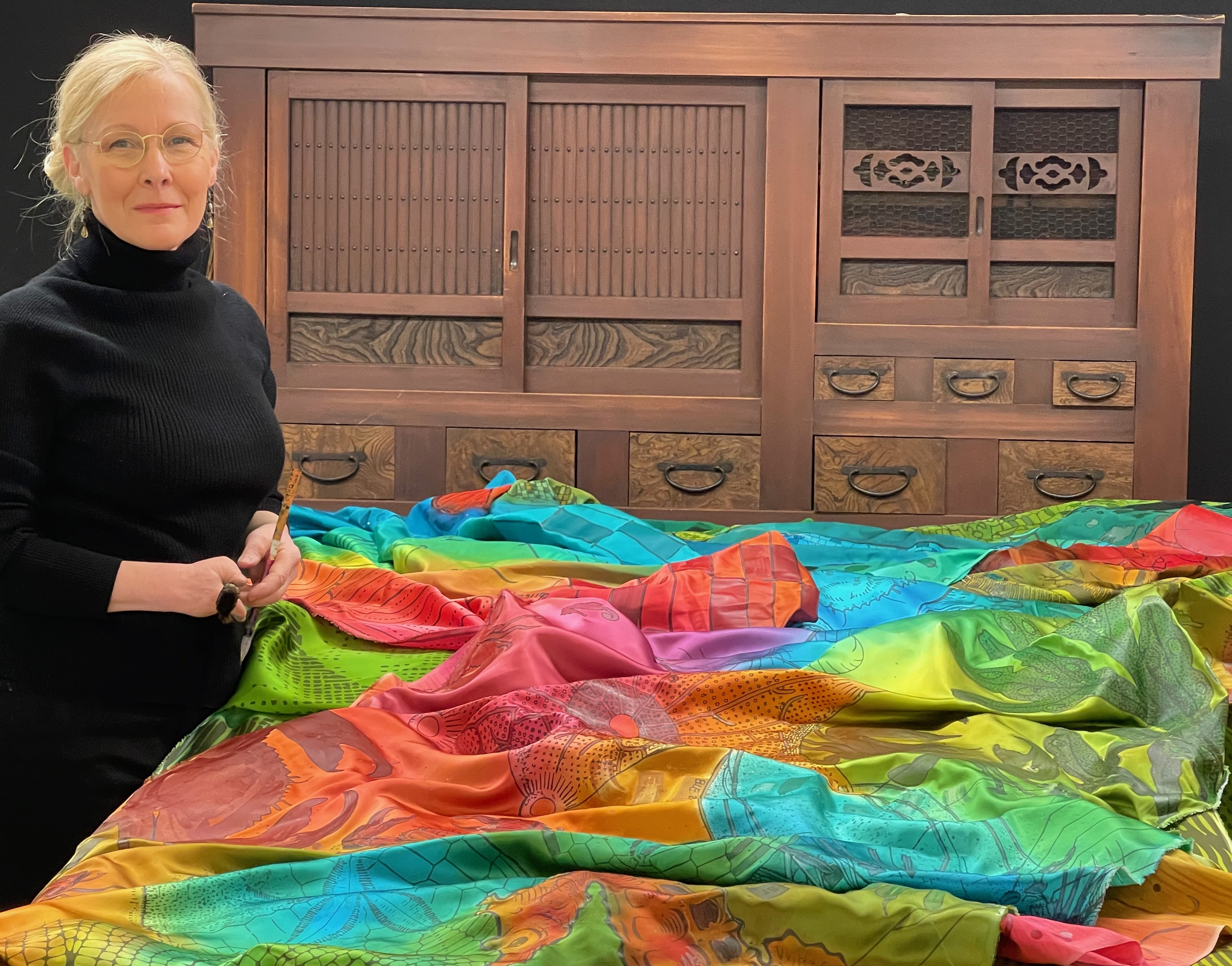
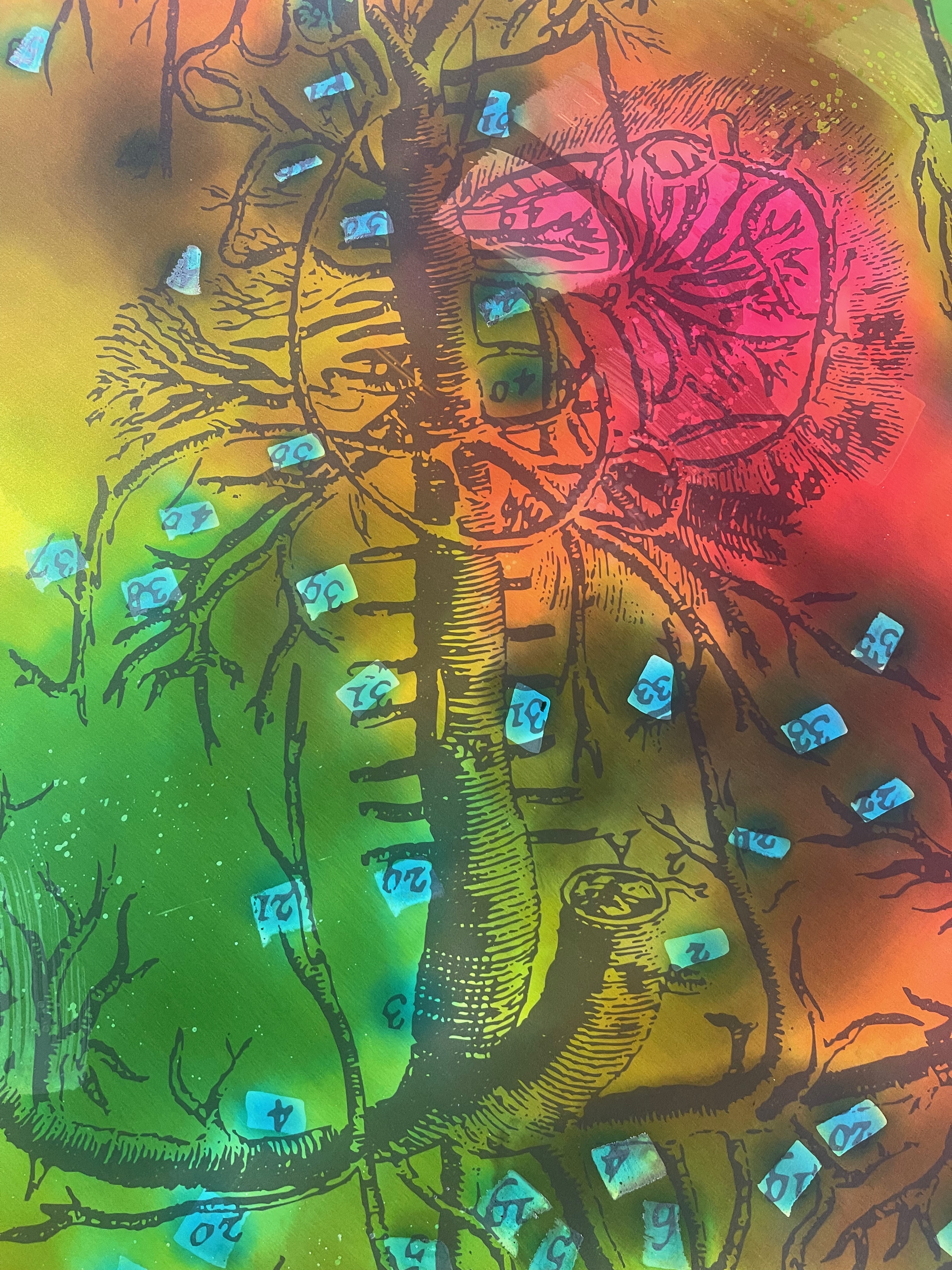
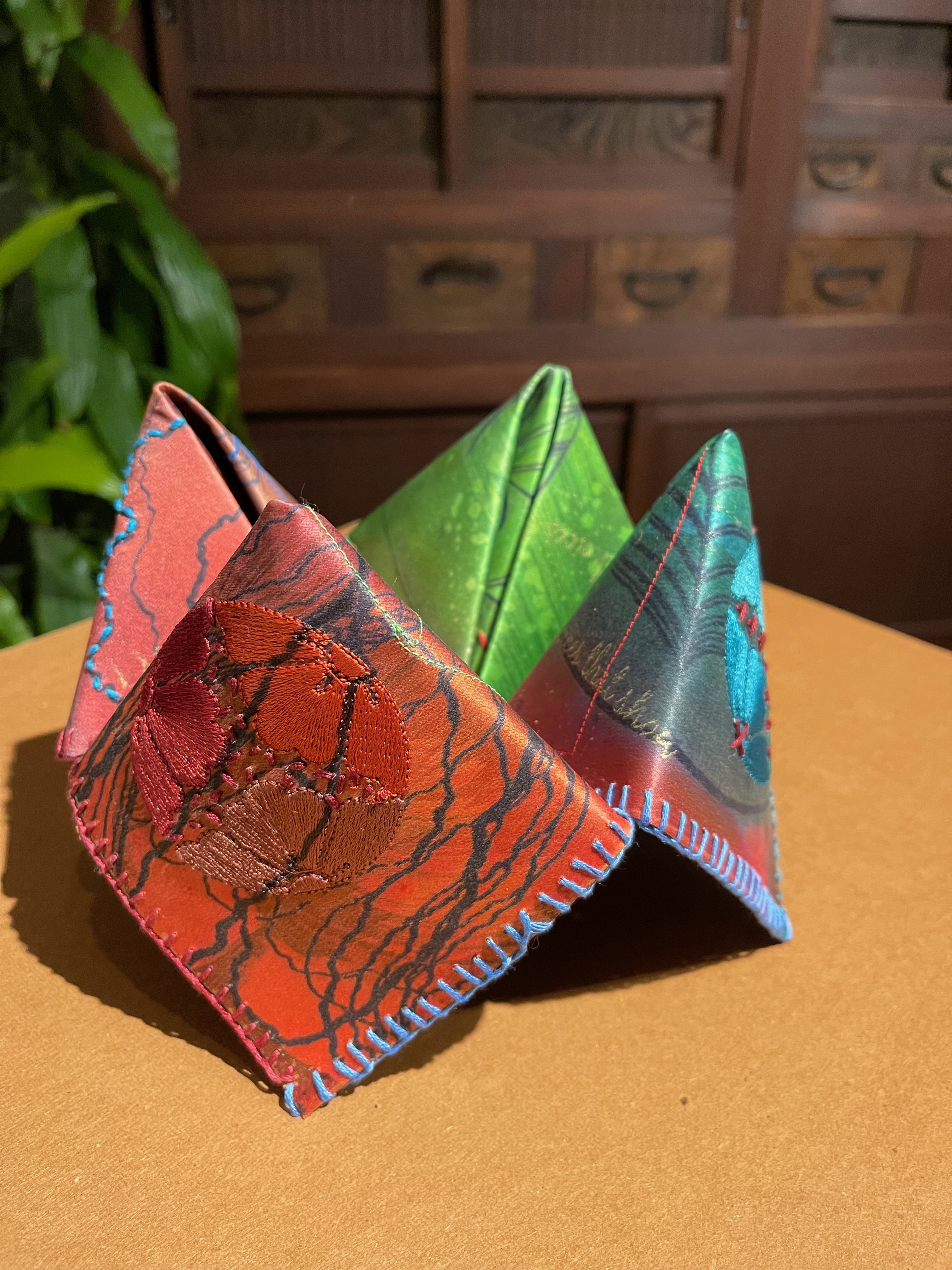
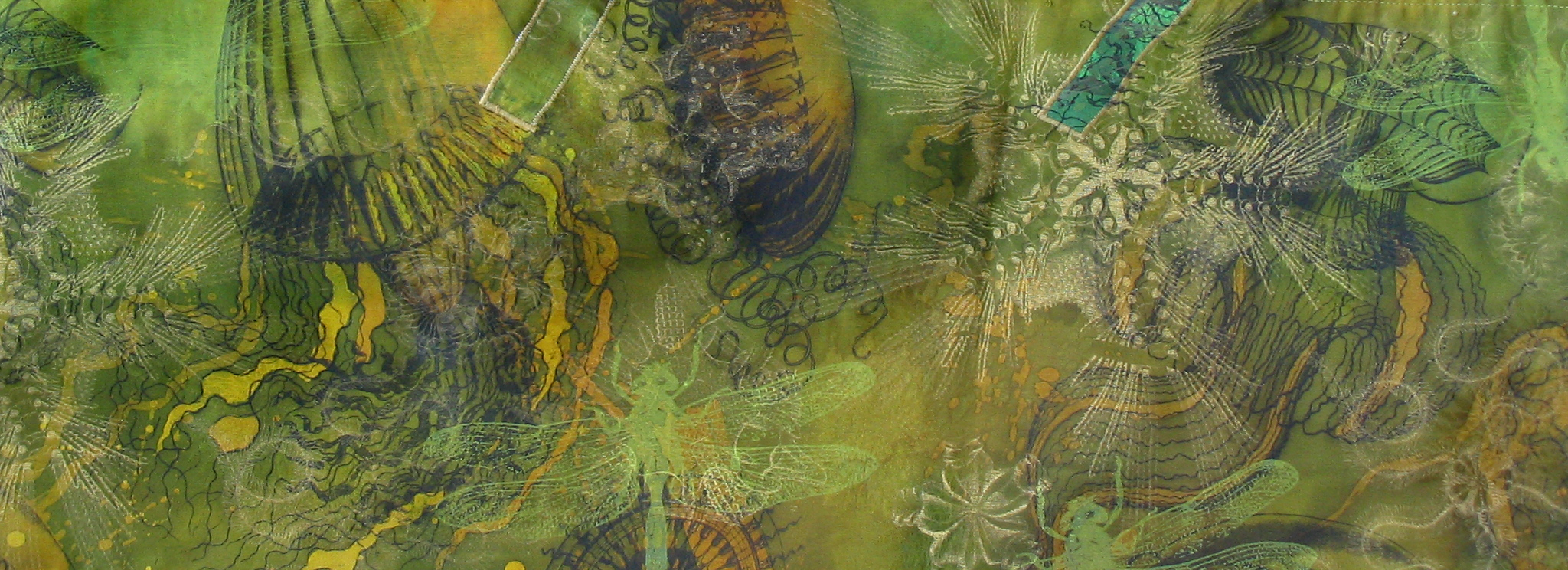
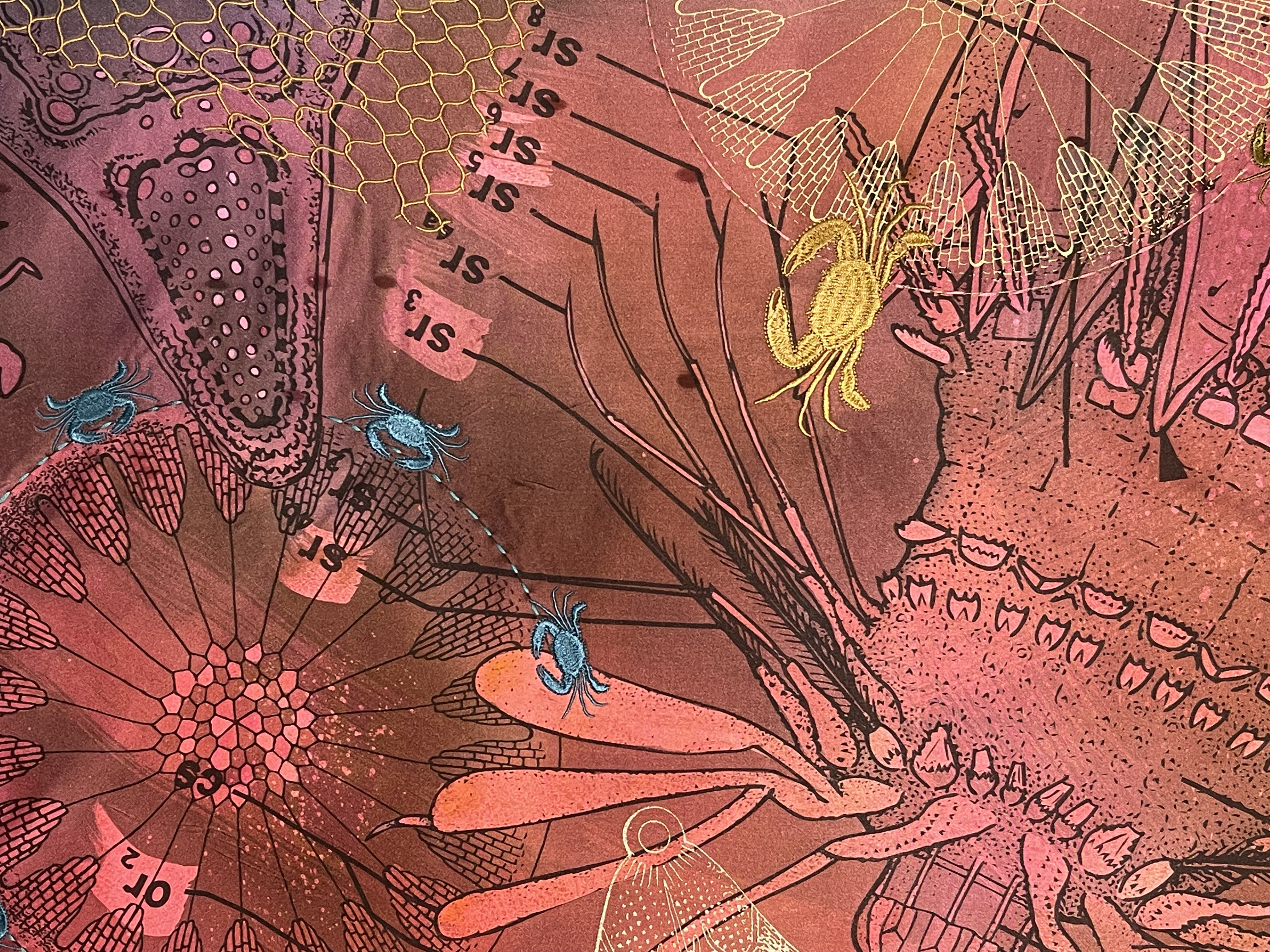
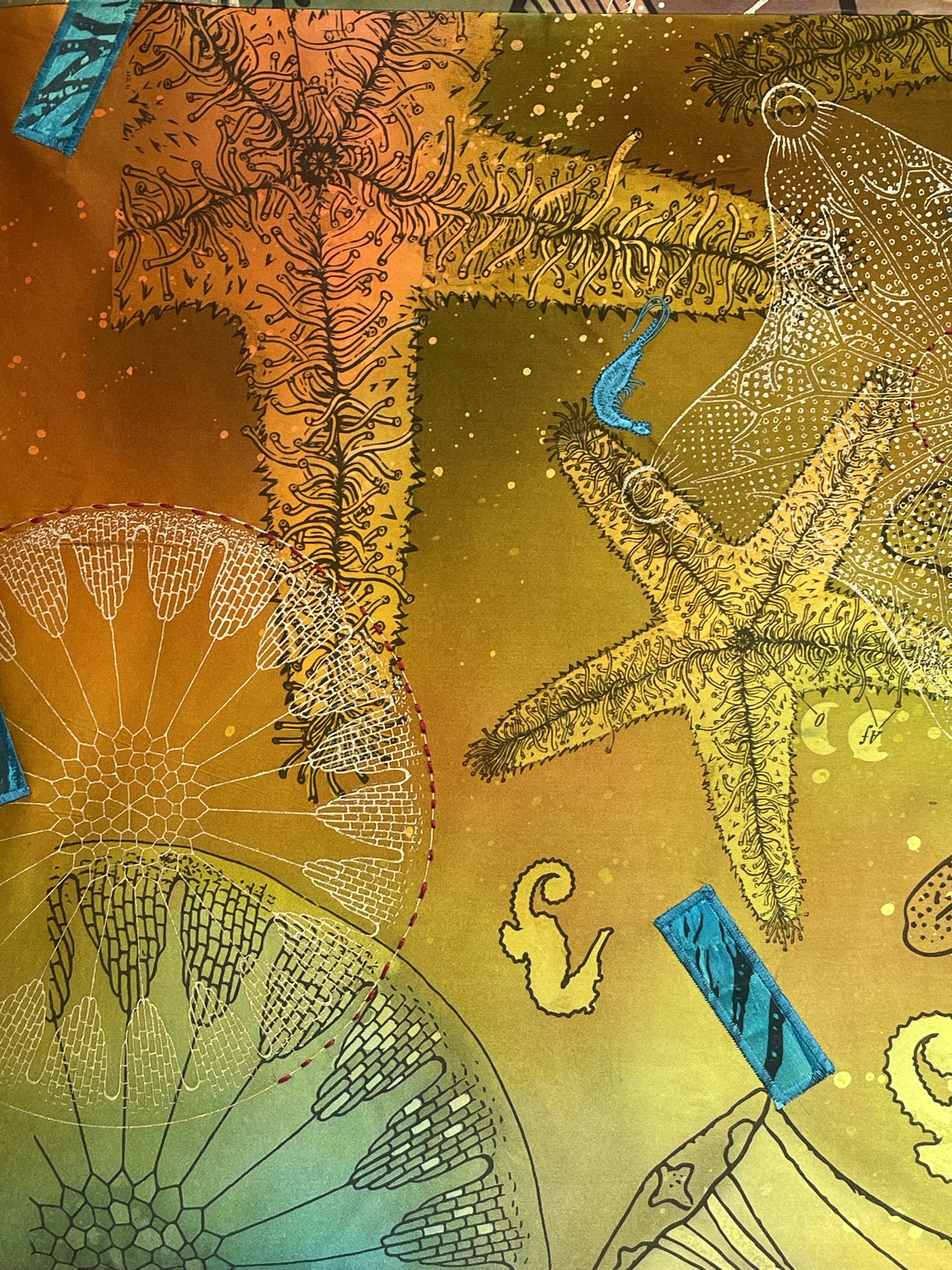
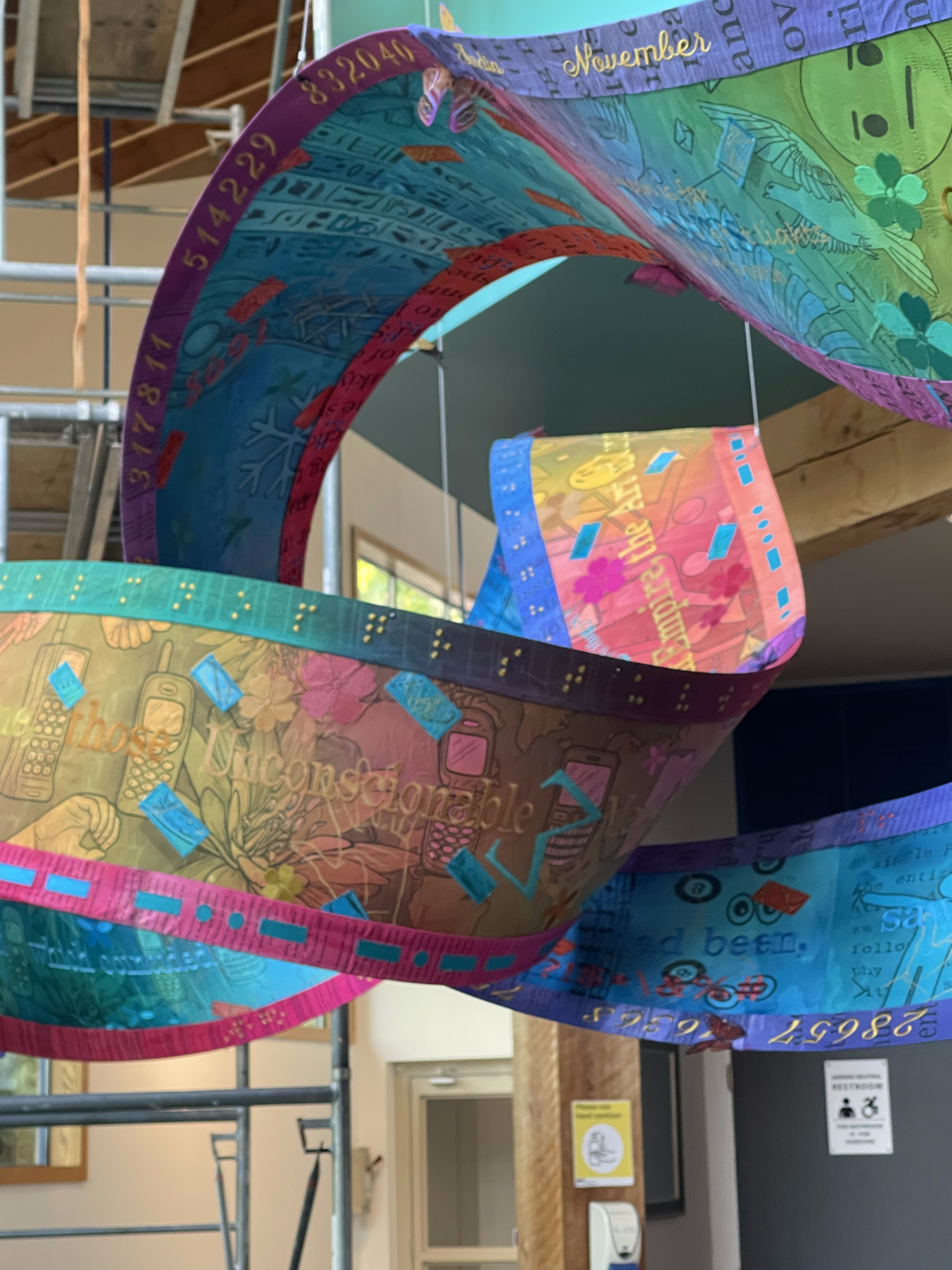
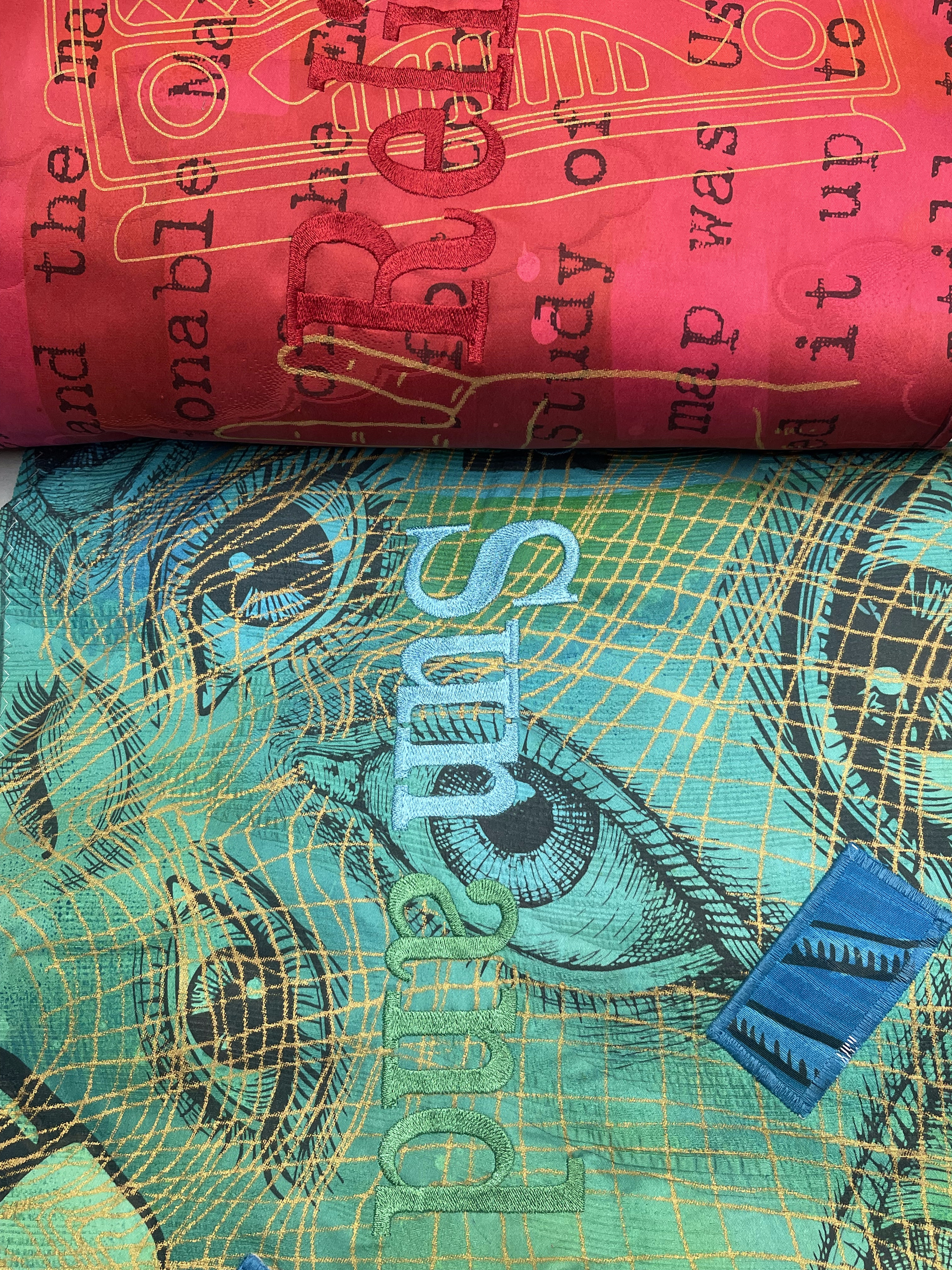
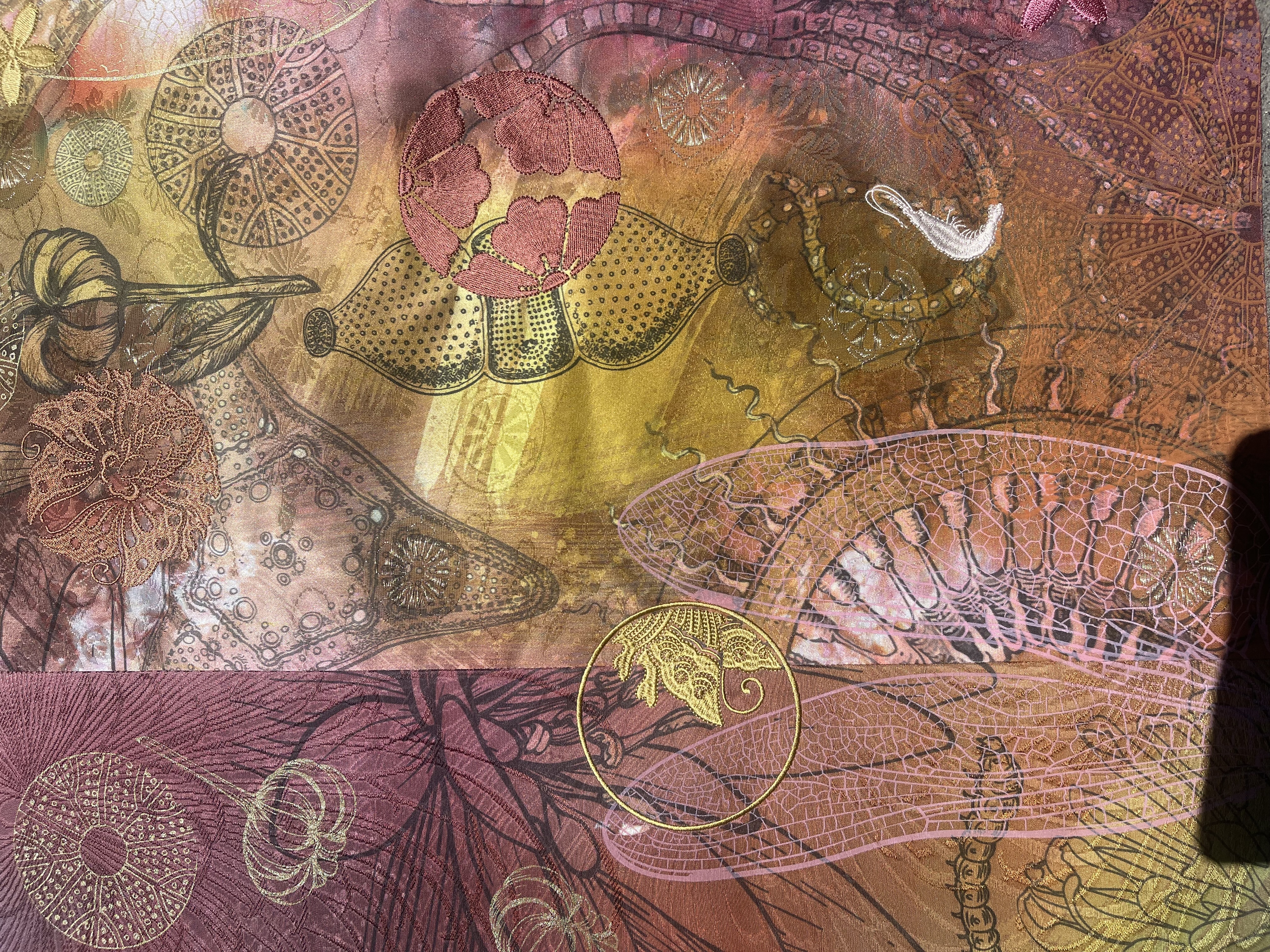
Each Möbius strip is 11 feet by 18 inches wide and is made of vintage white Japanese Jacquard (white on white with a pattern in the weave) kimono silk that is silk screen-printed with a myriad of images chronicling the history of communication. Subsequently wax resist dyed in the Japanese technique of Roketsuzome, digitally embroidered and appliquéd, the silk is then reinforced after removing the wax and steaming to ensure colourfastness. 22-gauge tin is the inner substrate.

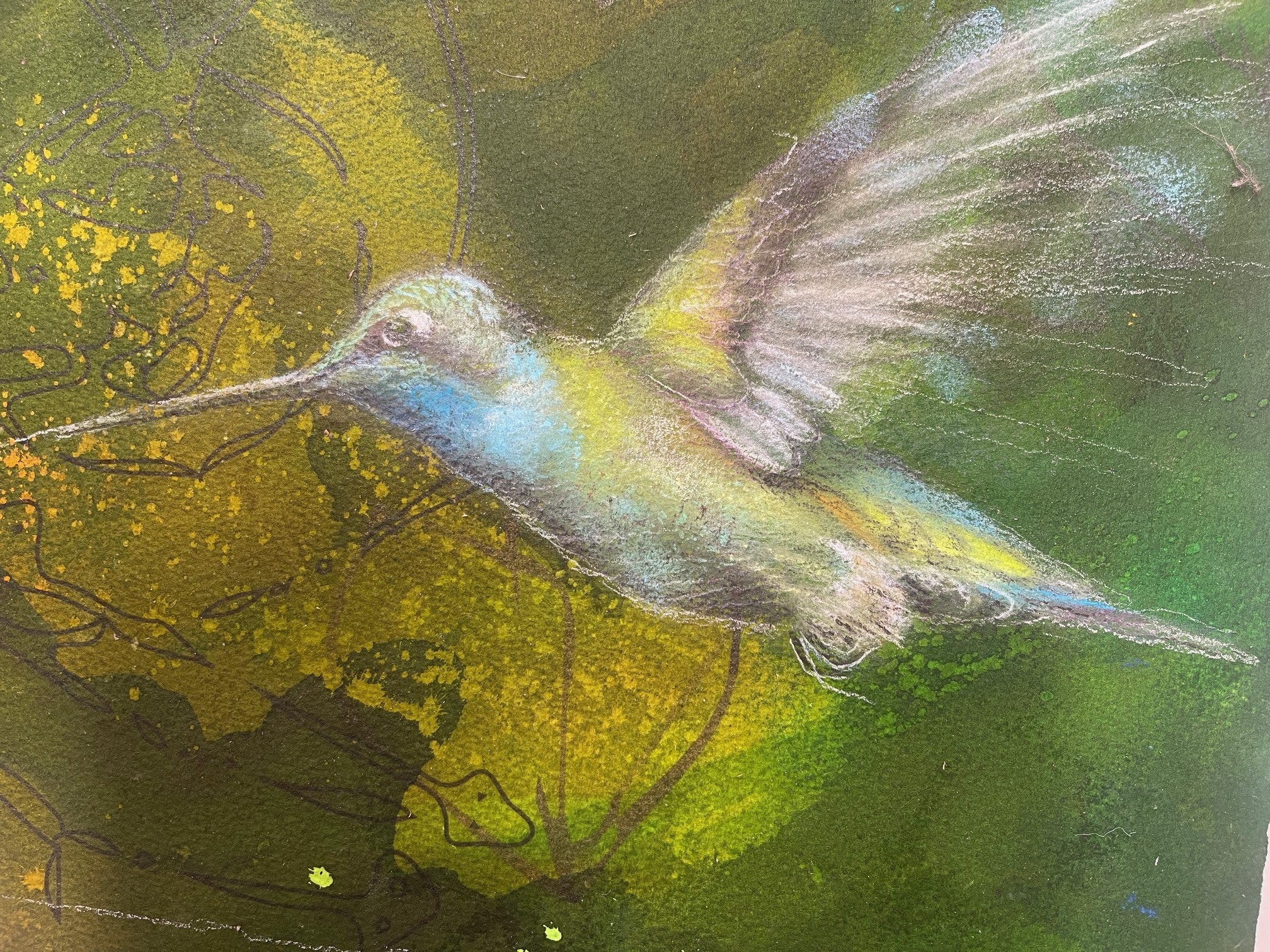
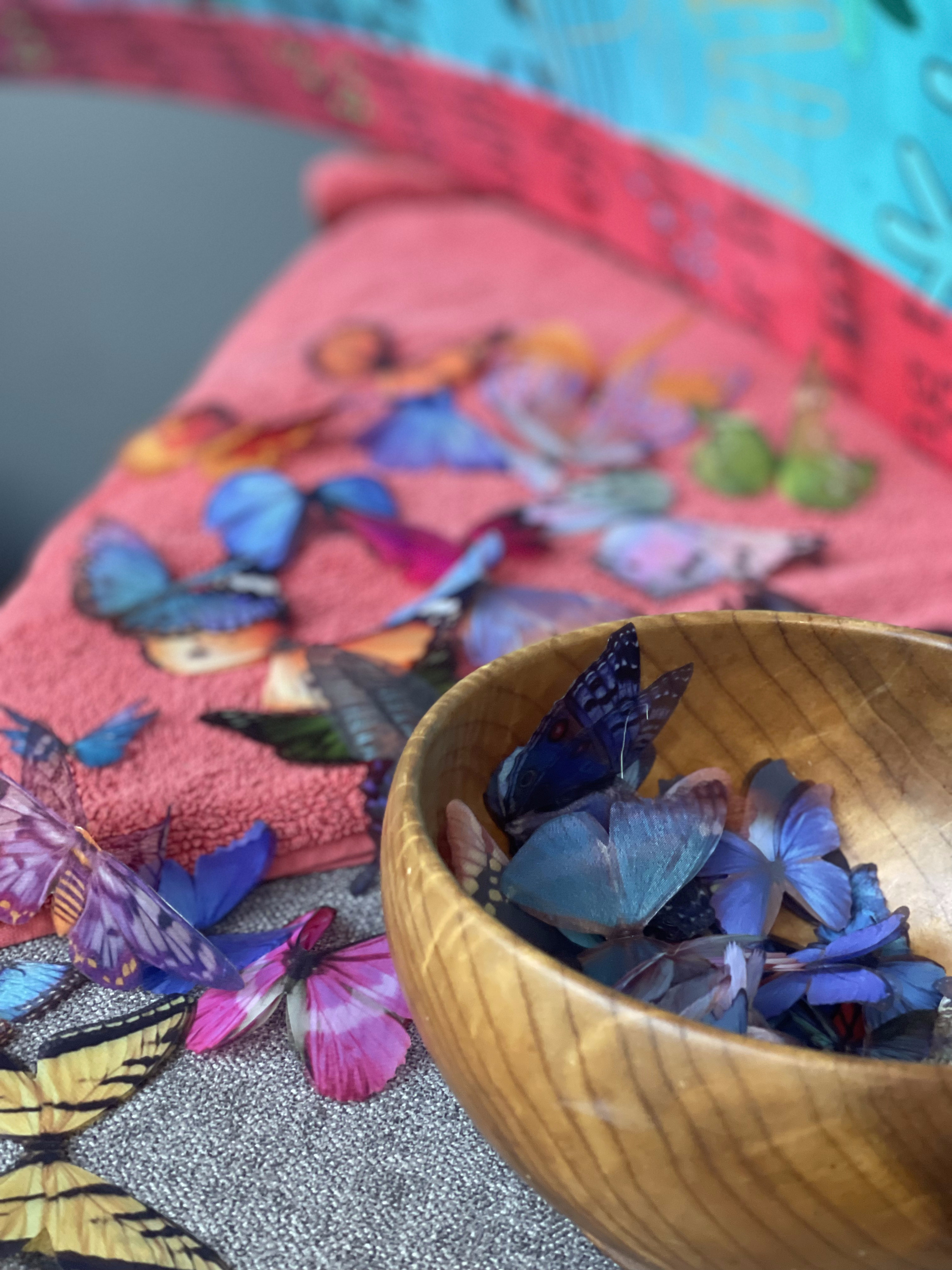
Hieroglyphs, telex, morse code, braille, music, calligraphy, typewriter font, radio, emojis, phones, flowers, sign language, semaphores and math populate the surface. Butterflies alight, echo transformation and give movement. We invite you to pause, explore and enjoy from both perspectives — above from the balcony as well as below. There are many things to discover and a "key" is posted for those interested.

Shannon Wardroper studied at what is now Alberta University of Art in art history and textiles and holds a Master of Arts Education from Simon Fraser University. Her goal working in contemporary textiles, is to generate entryways into conversations on subjects around technology and the environment we all have a shared investment in, especially regarding wellbeing.

"To run interference on the feelings of resignation regarding digital technology so many people tell me they feel today, we need community conversations. These can begin with art and can generate awareness, agency and action to be part of a steering wheel rather than simply fastening our seat belts."

Shannon lived, studied, taught and exhibited abroad in Japan, SE Asia and the UK for a decade before returning to settle on the West Coast where she maintains a home and studio and is grateful for the friendship, inspiration and support of many wonderful friends and community.

Appreciation goes to the Wilding Foundation's Catalyst grant here on Salt Spring. This important grant directly supports the working artist, often midstream, helping to complete major projects, bringing them to the public.

The ArtSpring team and board for embracing this major project, two years in the making.

A special thanks to Zoë Zafiris Casey for her positive creative vision and dedicated support.

Deep gratitude to the team of artisans and technicians who made this work possible. The "Single Narrative Transformation Machine" was a collaboration, including:

Tina Kempling — Imagine That Graphics

Jeff Hazzard — Hazzard Printing

Valerie Loewen — Malaspina Printmakers

Natali Kushch, Bucha Ukraine — Butterflies

Cheryl Hendrickson — All Stitched-Up Embroidery

Adrian Elliot assisted by Jessie Jule and Shasta Coffey — Installation

Shane Barclay — for every bit along the way

Studio Practice

Process

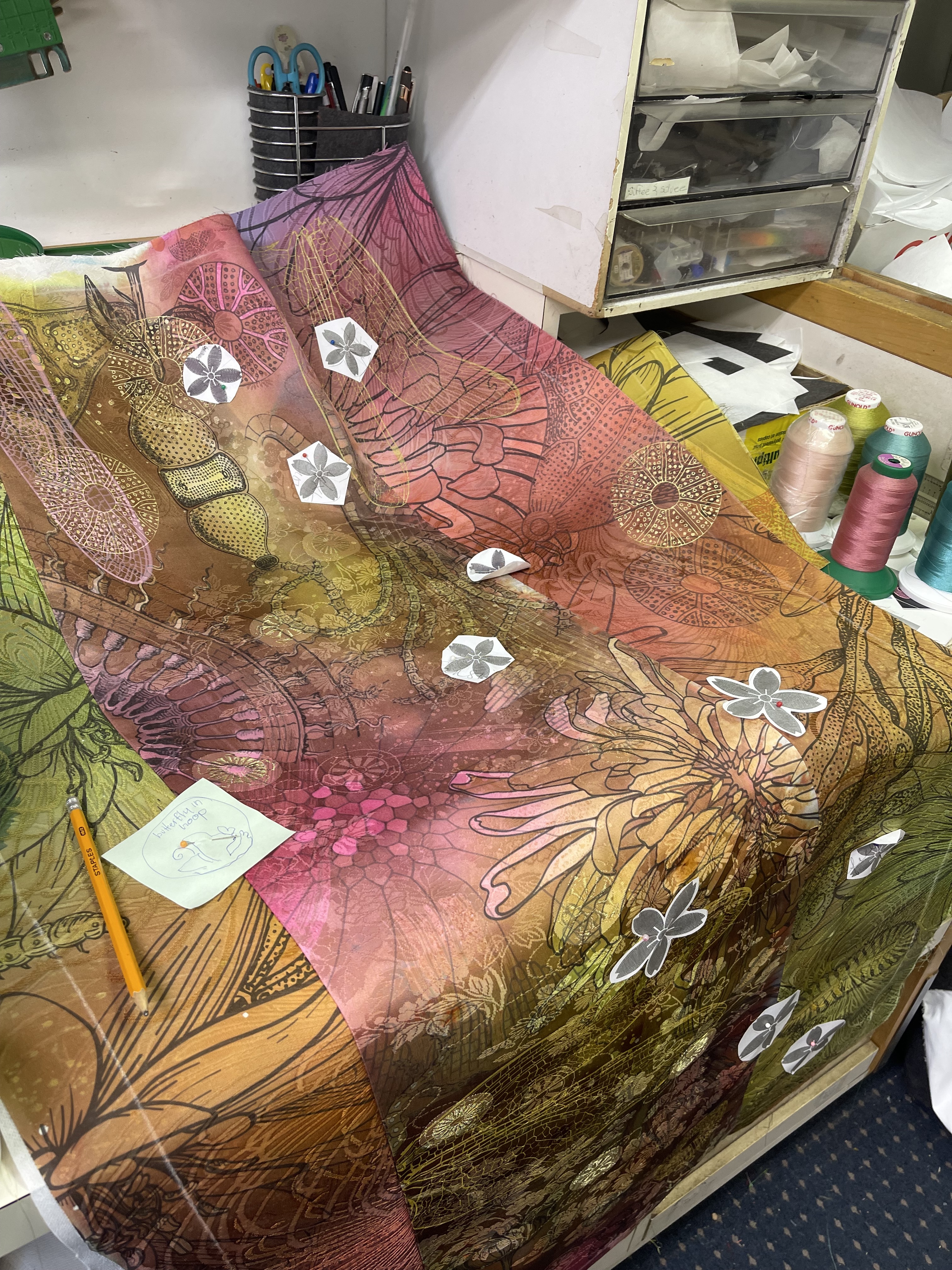
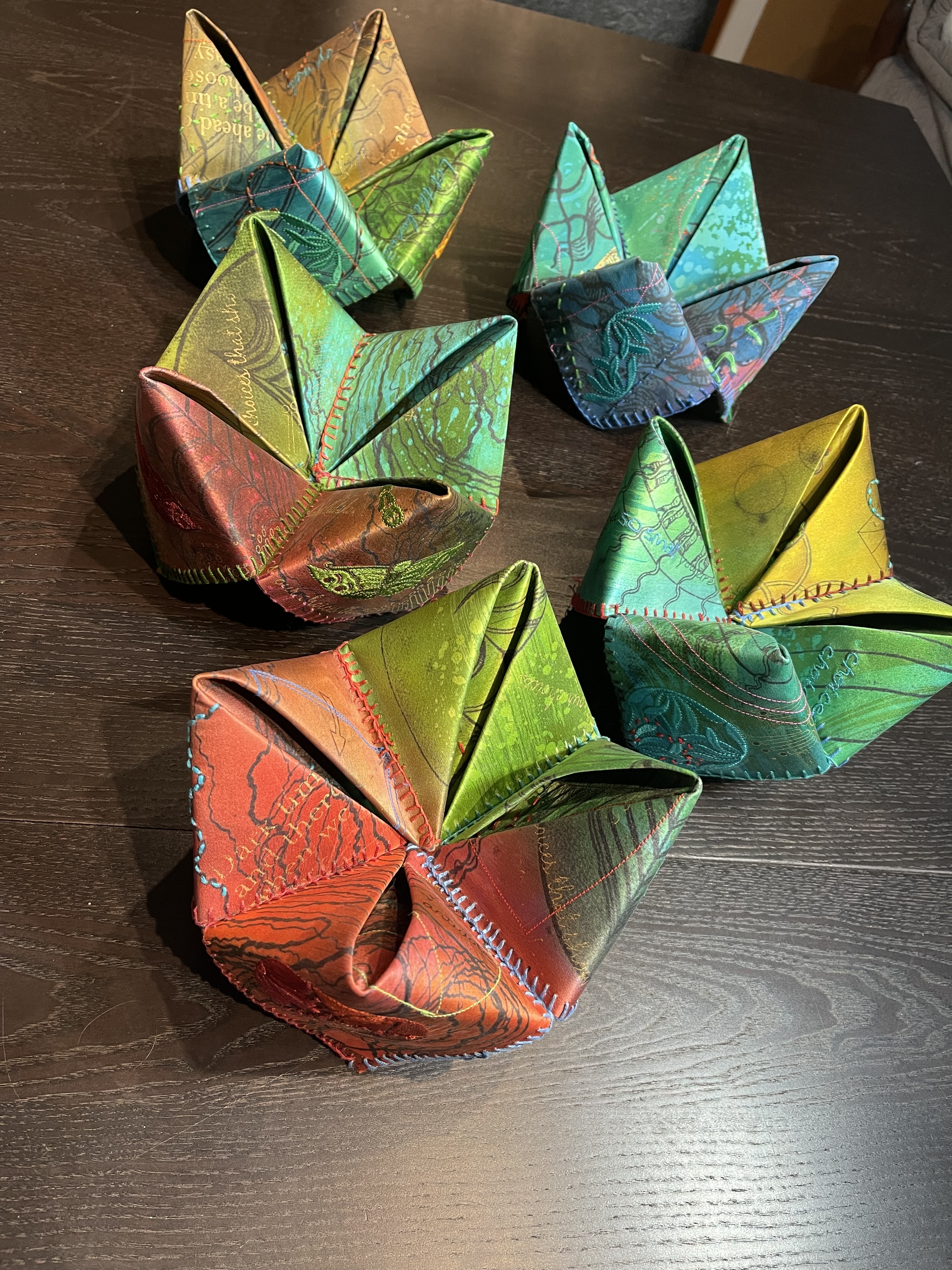
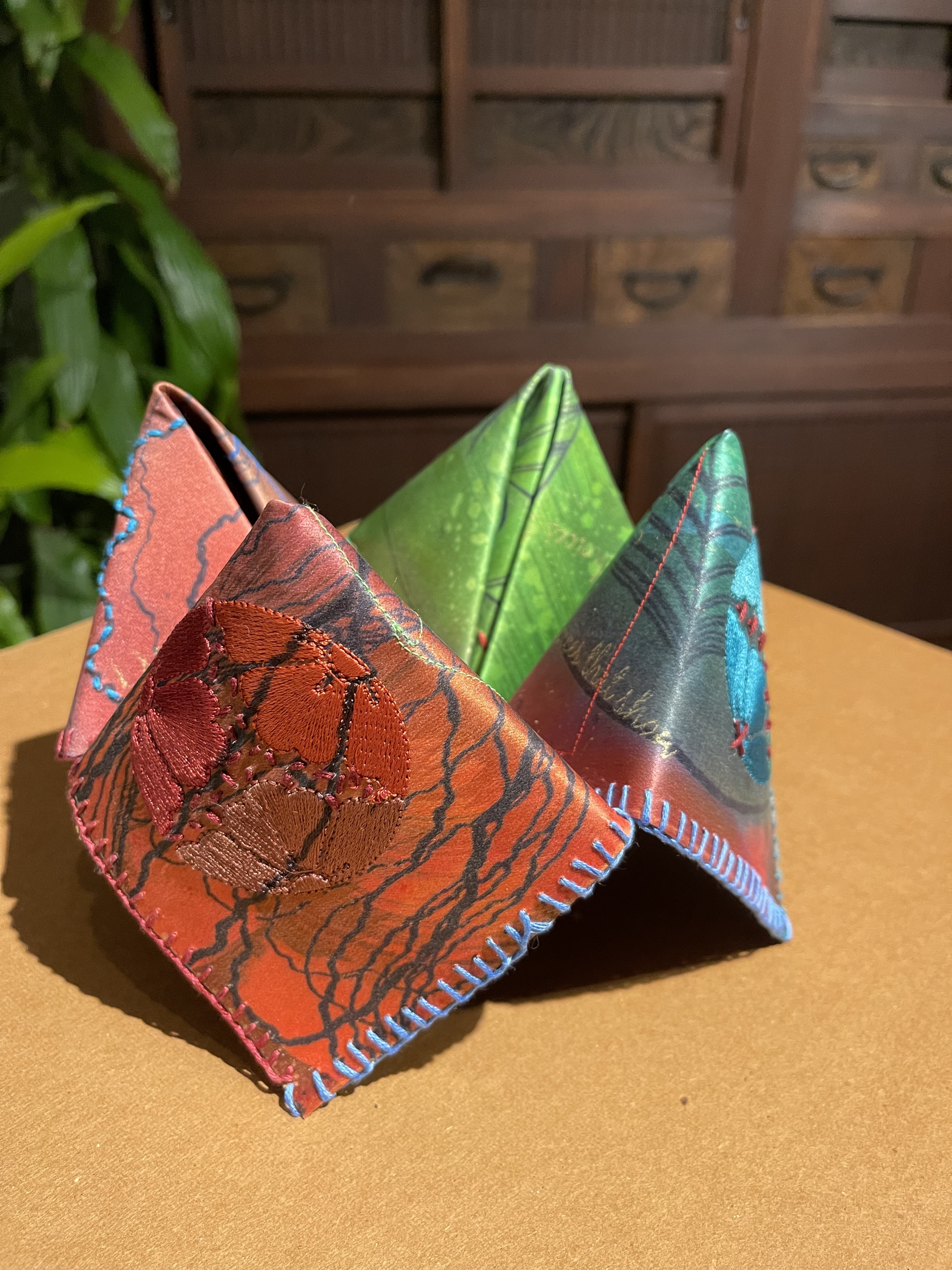
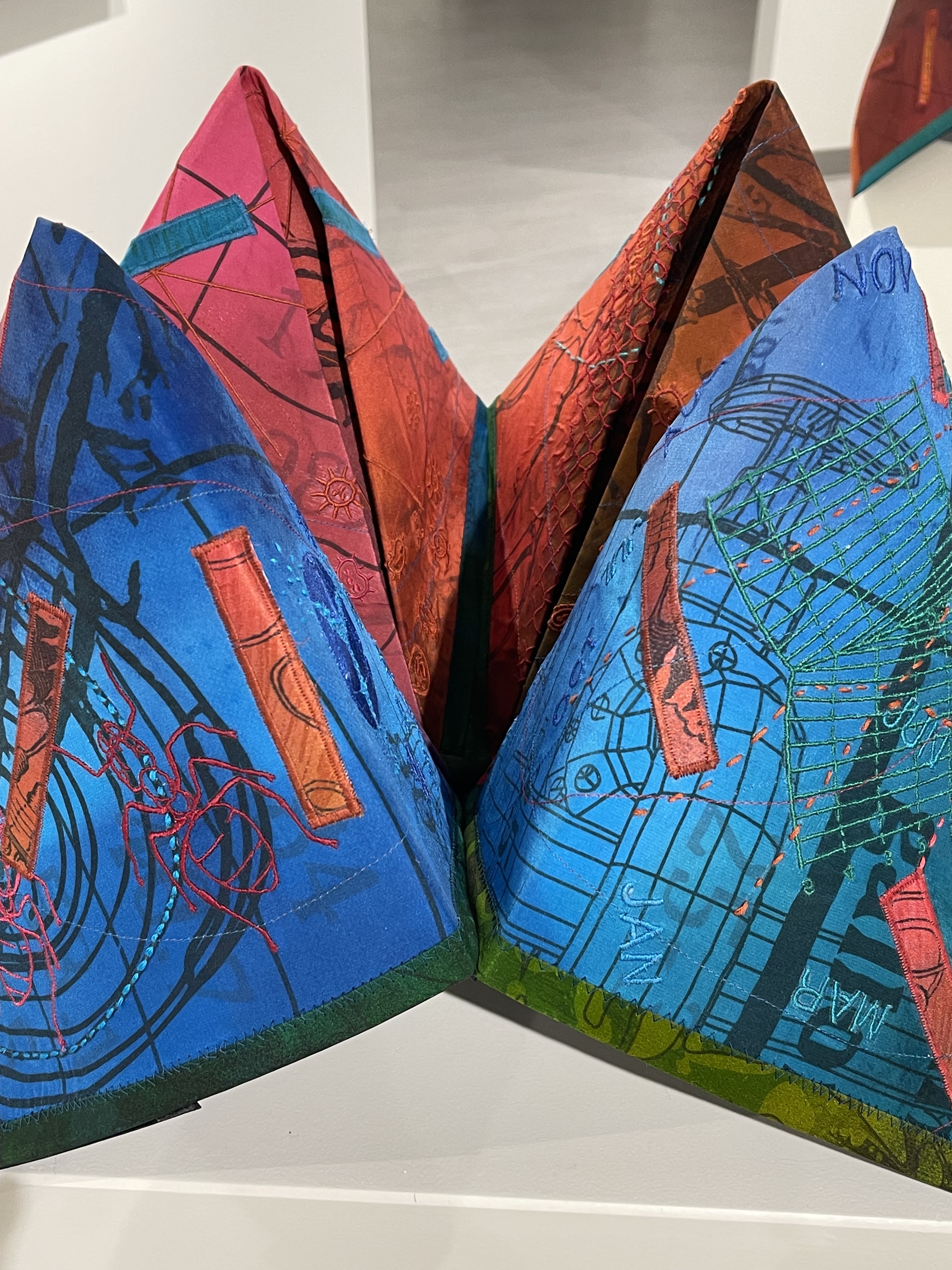
The textiles typically employ multiple layered techniques to achieve a rich, complex and intriguing result. Screenprinting both digital and by hand, Roketsuzome — the traditional painterly wax resist technique used to pattern kimono — strip piecing, hand and digital embroidery, along with appliqué and other finishing techniques all contribute to the unique finished result. Silk is a protein fibre and as such reflects the light in a similar luminous way to stained glass. Complex dye mixing results in vivid, unique colours and is often mixed directly on the silk through layering.

Availability

Commissions, Teaching & Lecture

Shannon is available for commission work, private and university textile workshops, and lectures on aesthetics and textiles. To discuss a project or engagement, please get in touch directly.

Contact

Get in Touch

Shannon Wardroper

Write to Shannon at shannon@wardroper.org

Shannon's studio is located on Salt Spring Island, BC, just steps from Ganges village. Visitors are welcome to stay at her magical historic waterfront B&B, available on Airbnb in three configurations:

The Cottage   ·   Ocean Harbour View Room   ·   Ocean View Balcony Room